
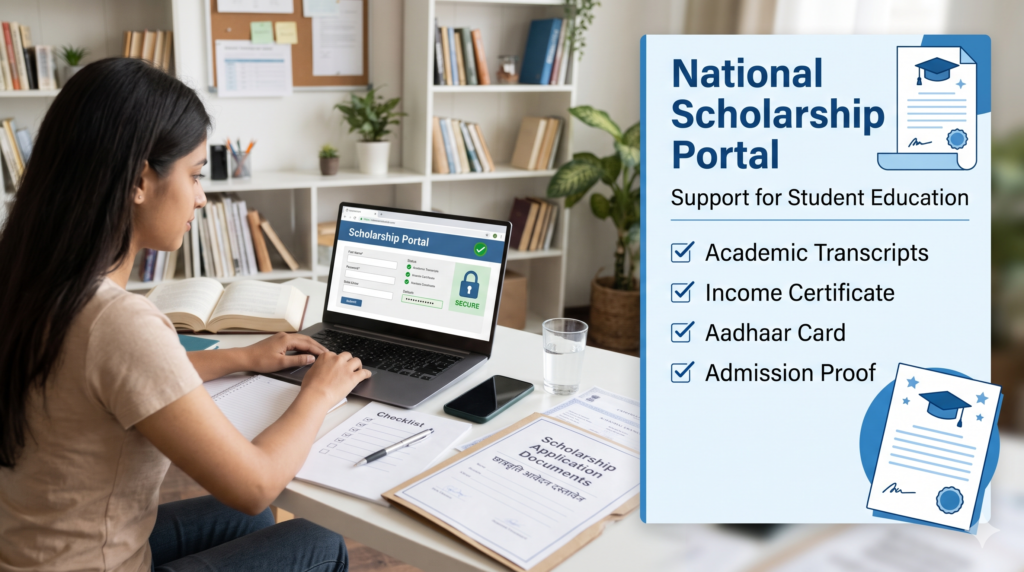
Post Matric Scholarship: Eligibility, Documents and How to Apply
Table of Contents
Education can open the door to better career opportunities, but the cost of studying after Class 10 can be difficult for many families. College fees, examination charges, books, accommodation and other educational expenses may become a burden, particularly for students from economically weaker backgrounds.
The Post Matric Scholarship is a name commonly used for scholarship schemes that support eligible students studying beyond the matriculation level. Depending on the scheme, students may receive financial assistance towards approved educational fees and other eligible expenses.
However, there is an important detail students should understand before applying. The Post Matric Scholarship is not one identical scheme with the same rules for every student in India. Different government departments and state governments administer scholarships for specific categories, including Scheduled Caste (SC), Scheduled Tribe (ST), Other Backward Classes (OBC) and other eligible groups. Rules can differ according to the scheme, state, course and academic year.
In this guide, you will learn how the Post Matric Scholarship works, who may qualify, which documents are commonly required, how to apply online and how to avoid mistakes that could delay your application.
What Is the Post Matric Scholarship?
The Post Matric Scholarship is a general term for scholarship assistance offered to eligible students pursuing education after matriculation, usually Class 10. Many such schemes are designed to help students continue their education when family income and educational expenses create financial difficulties.
For example, an eligible student may be studying in Class 11, Class 12, an undergraduate degree, a diploma, a postgraduate course or another approved programme. Whether that course is covered depends on the particular scholarship’s official guidelines.
The Government of India’s Department of Social Justice and Empowerment administers a Post-Matric Scholarship scheme for SC students. The Ministry of Tribal Affairs also describes a Post-Matric Scholarship scheme for ST students, implemented through states and Union Territories. Other category-specific and state-level schemes have their own conditions. Students should therefore check the relevant official scheme rather than assuming all scholarships share the same requirements.
You can explore the National Scholarship Portal to see schemes listed there. Some scholarships are available through state government portals instead, so applicants should also check their state’s official education or social welfare department website.
The main purpose of the Post Matric Scholarship is to support eligible students in continuing their education. It does not mean every applicant receives the same amount or that every course is automatically covered.
What Are the Main Benefits?
The benefits of a Post Matric Scholarship depend on the scheme and the student’s eligibility. Assistance may include one or more of the following:
- Eligible educational fees: Certain schemes reimburse or cover approved compulsory fees, subject to applicable limits and rules.
- Maintenance allowance: Some schemes provide an allowance towards expenses associated with studying.
- Support for continued education: Financial assistance may help eligible students remain enrolled and complete their course.
- Direct benefit transfer: Payments under many government schemes are transferred electronically to the eligible beneficiary or handled according to the scheme’s approved payment process.
- Renewal for continuing students: Some schemes allow students to renew their scholarship for subsequent academic years if they satisfy renewal conditions.
The Post Matric Scholarship should not be treated as a guaranteed payment for every expense. The approved amount may depend on the course group, whether the student is a day scholar or hosteller, the fee structure, the scheme’s financial limits and other rules.
Before making financial plans, read the official guidelines for your exact scholarship. Do not rely only on social media posts or videos that quote a single scholarship amount without explaining the scheme and academic year.
Who Is Eligible for the Post Matric Scholarship?
There is no single eligibility rule that applies to every Post Matric Scholarship in India. The conditions below are common areas to check, not a universal guarantee of eligibility.
1. Category or community requirements
Some schemes are specifically designed for students belonging to a notified category, such as SC or ST. Other schemes may cover OBC, EBC, minority, disability-related or other eligible groups, depending on the department and scheme.
Applicants must satisfy the category definition and documentation requirements specified in the applicable rules. A certificate alone does not establish eligibility if the student does not meet the remaining conditions.
2. Educational qualification
Many post-matric schemes require the applicant to have passed Class 10 or an equivalent examination and to be studying in an approved post-matric course. The precise starting class, permitted courses and institution requirements vary.
Students should confirm that their course and institution are recognised or approved under the relevant scheme. If a course is not included in the approved list, an application may be rejected even when the student meets the income and category requirements.
3. Family income
Family income is an important eligibility condition for many government scholarships. The income ceiling is not necessarily identical across all schemes.
For example, the central Post-Matric Scholarship scheme for SC students has published guidelines specifying a parental or guardian income ceiling of ₹2.5 lakh per year. The Ministry of Tribal Affairs also lists a ₹2.5 lakh annual parental income ceiling for its Post-Matric Scholarship scheme for ST students. These figures relate to those schemes and should not automatically be applied to every state or category-specific scholarship.
OBC and other state-level schemes may have different income conditions. Check the current guidelines for your own scheme before applying.
4. Domicile or state requirements
A student may need to apply through the state or Union Territory where they are domiciled, according to the scheme’s rules. The state may determine eligibility, verify the application and process the scholarship.
Students studying outside their home state should not assume they must apply through the state where their college is located. Read the relevant instructions and ask the institution’s scholarship office if the correct portal is unclear.
5. Recognised institution and approved course
The institution and course may need to meet the recognition, affiliation or approval requirements of the scholarship. Students should verify their institution’s details before completing the form.
6. Academic and attendance conditions
Some schemes require satisfactory academic progress, regular enrolment, attendance or successful completion of the previous academic year. Renewal conditions may differ from fresh-application conditions.
7. Other scholarship restrictions
Certain schemes restrict receiving another scholarship or stipend at the same time. Other schemes may allow more than one benefit under specified conditions. Read the rules carefully and disclose other financial assistance when the application asks for it.
The best way to confirm your eligibility for the Post Matric Scholarship is to match your category, family income, course, institution and domicile against the official scheme guidelines.
Documents Required for the Post Matric Scholarship
The exact document list depends on the scheme and state portal. Prepare the following commonly requested documents where applicable:
- Aadhaar or other accepted identity document: Use the identity proof specified in the application instructions.
- Recent photograph: Some portals request a photograph in a prescribed format.
- Caste or category certificate: Required when the scheme is limited to a particular category.
- Income certificate: Evidence of family income issued by the authority accepted under the scheme.
- Domicile or residence certificate: Required where the scheme specifies a domicile condition.
- Previous examination marksheet: For example, the Class 10 marksheet or the result from the previous academic year.
- Current admission or enrolment proof: Evidence that the student is studying in the course for which assistance is requested.
- Fee receipt or fee structure: May be required to verify approved educational charges.
- Bank account details: Account information required by the scholarship’s payment process. The account holder and bank validation requirements must be checked in the scheme instructions.
- Bonafide certificate: Some institutions or portals request confirmation that the student is currently enrolled.
- Hostel certificate: May be required if the scheme calculates assistance differently for hostellers.
- Disability certificate: Applicable only where a relevant scheme or benefit requires it.
- Renewal-related academic documents: Continuing students may need their latest marksheet and proof of continued enrolment.
Not every applicant will need every document. Do not upload a document simply because it appears on an unrelated scholarship checklist. Follow the list displayed on your selected portal and any instructions issued by your institution.
For help with a category certificate, see our guide on how to apply for a Caste Certificate. For income-related documentation, read Income Certificate: Online Application Guide. These documents may be relevant to some applications, but their acceptance depends on the rules of the scholarship you select.
How to Apply for the Post Matric Scholarship Online
The application route differs by scheme. Some applications are submitted through the National Scholarship Portal (NSP), while others use a state scholarship portal or another government-authorised platform.
Use these steps as a general guide.
Step 1: Identify the correct scheme
Visit the National Scholarship Portal and review the available schemes. Search for a scholarship that matches your category, course, state and academic year.
If you cannot find the relevant scheme, check the official website of your state’s Social Welfare, Tribal Welfare, Backward Classes Welfare or Education Department, as appropriate.
Do not select a similarly named scheme without checking its eligibility conditions.
Step 2: Read the official guidelines
Before registering, review the eligibility criteria, income limit, course requirements, document list, application dates and renewal rules.
The Post Matric Scholarship may have separate conditions for fresh applicants and students renewing an existing award. Confirm which type of application you need to submit.
Step 3: Register on the correct portal
If the scheme uses NSP, follow the portal’s current student registration instructions. Enter your details accurately and use your own accessible contact information where required.
If the scholarship is handled through a state portal, follow that portal’s registration process instead. Do not create multiple registrations unless the official instructions specifically require them.
Step 4: Sign in and complete the application
Enter your personal details, educational information, category information, income details, institution name, course and bank details as requested.
Ensure the information matches your supporting documents. Small differences in names, dates of birth, account details or institution information can lead to verification problems.
Step 5: Upload the required documents
Upload clear, readable files in the formats and sizes permitted by the portal. Check that every document belongs to the applicant and that no page is missing.
If the portal asks for a certificate issued by a particular authority, do not substitute an unrelated document without confirmation.
Step 6: Review and submit
Review the complete form before submitting it. Check the selected scheme, academic year, category, course, institution, income details and bank information.
Submit the application using the portal’s official process. Save the application number, acknowledgement or other reference details provided by the system.
Step 7: Complete institution verification
Many scholarship applications require verification by the educational institution. The institution may check enrolment, course information and submitted documents.
Submitting the form does not necessarily mean the application has been fully verified. Check the portal for any pending action and contact your institution’s scholarship office if verification is incomplete.
Step 8: Monitor the application
Check the official portal regularly for application status, requests for corrections and payment updates. Respond within the stated period if the portal identifies a defect or requests additional information.
The Post Matric Scholarship application process may involve several verification stages, and processing time can vary. Avoid assuming that an application is approved just because it was submitted successfully.
How to Check Post Matric Scholarship Status
After applying, students often want to know whether their application has been verified or whether the scholarship amount has been released.
The exact status-check process depends on the portal. In general:
- Visit the official portal where you submitted your application.
- Sign in using the permitted login method.
- Open the application, status or tracking section.
- Enter any required application or reference details.
- Read the latest status message and check for pending actions.
- Save a copy or screenshot of the status for your records.
Possible status messages may indicate submission, verification pending, a defect requiring correction, approval, rejection or payment processing. The wording differs by portal, so read the accompanying explanation rather than guessing what a status means.
If the application is pending with your institution, contact its scholarship office. If it is pending with a state or district authority, follow the official contact or grievance process displayed by the portal.
For payment-related concerns, verify the bank details and any payment information available through the authorised system. Do not share your password, one-time password or sensitive banking credentials with people claiming they can release your scholarship.
Post Matric Scholarship Renewal Process
Students who have already received a scholarship may need to submit a renewal application for the next academic year. Renewal is not always automatic.
The renewal process may ask you to:
- Sign in to the same or designated scholarship portal.
- Select the renewal option for the relevant academic year.
- Confirm your current course, year of study and institution.
- Enter the latest academic results where required.
- Update income, bank or contact details if the portal permits or requires it.
- Upload the latest marksheet, fee receipt or other documents requested.
- Submit the renewal form and complete the required verification.
Check the renewal deadline carefully. A student who received assistance in the previous year should not assume that their award will continue without an application or verification.
If you have changed your course, institution, state or bank account, check the scheme’s instructions before updating the information. Some changes require additional documents or approval.
Common Reasons for Application Delays or Rejection
An application may be delayed or rejected for several reasons. Common problems include:
Incorrect personal information: The name or date of birth entered on the form does not match the supporting records.
Invalid or outdated certificates: A certificate may not meet the scheme’s format, issuing-authority or validity requirements.
Income above the applicable limit: The applicant’s family income does not satisfy the selected scheme’s rules.
Course or institution not eligible: The programme or college may not be covered by the scheme.
Incomplete application: Required fields or supporting documents have been left blank.
Institution verification pending: The student has submitted the form, but the institution has not completed its verification.
Bank details incorrect: Account information may be inaccurate or fail the checks required for payment.
Duplicate or conflicting applications: Multiple applications or undisclosed overlapping benefits may conflict with scheme rules.
Missed deadline: The application or correction was not completed within the permitted period.
If your Post Matric Scholarship application is rejected, read the reason displayed on the official portal. Correct the problem or use the official grievance or appeal route if one is available. Do not submit false information or pay an agent who promises guaranteed approval.
Important Tips Before Applying
Keep these practical points in mind before submitting your Post Matric Scholarship application.
- Use official websites: Start with the National Scholarship Portal or the official state department website.
- Confirm the academic year: Make sure you are applying for the correct session.
- Check the deadline: Different schemes can have different application and verification dates.
- Keep document copies: Save readable copies of the submitted form and acknowledgement.
- Use accurate bank details: Follow the scheme’s specific instructions for the account and payment process.
- Check your portal regularly: Watch for corrections, verification updates and payment information.
- Ask your institution for help: Its scholarship or administration office may clarify course details and verification requirements.
- Do not trust guaranteed-payment claims: Scholarship approval depends on the official eligibility and verification process.
If you are unsure which scheme matches your circumstances, you can also read our guide to checking government scheme eligibility online. The guide can help you understand how to research eligibility, but the final decision must be based on the official scholarship rules.
Where Can You Get Official Help?
For central schemes listed on NSP, use the contact and grievance options published on the official National Scholarship Portal. For a state-administered scholarship, consult the relevant state’s official scholarship or welfare department.
You may also contact your school’s or college’s scholarship office for questions about enrolment records, course approval or institution verification. Keep your application reference number available when asking for help.
Adhikar Kendra is an independent information website. It is not a government department and does not approve scholarships or control payment timelines. We provide general guidance to help students understand the application process. Always verify the latest scheme details on the relevant official portal.
Conclusion
The Post Matric Scholarship can help eligible students continue their education by providing financial assistance under specific government schemes. However, eligibility, income limits, approved courses, documents, application routes and payment rules differ between schemes and states.
Start by identifying the correct scholarship, reading its official guidelines and preparing the required documents. Complete the application carefully, save your acknowledgement and track verification until the process is complete. Continuing students should also check whether renewal is required for the next academic year.
A careful application can help you avoid preventable errors. Most importantly, use official sources for current information and never assume that a scholarship is guaranteed before the relevant authority confirms your eligibility and approval.
Frequently Asked Questions (FAQs)
1. What is the Post Matric Scholarship?
It is a general term for scholarship schemes that provide financial assistance to eligible students studying after the matriculation level. Conditions vary by scheme, category and state.
2. Who can apply for the Post Matric Scholarship?
Eligibility depends on the specific scheme. It may include category requirements, family income limits, approved courses, recognised institutions and domicile conditions.
3. What is the income limit for the Post Matric Scholarship?
There is no single income limit for every scheme. For example, the central Post-Matric Scholarship schemes for SC and ST students list a ₹2.5 lakh annual parental income ceiling. Always check the rules for your particular scholarship.
4. Which documents are required?
Common documents include identity proof, income certificate, category certificate where applicable, domicile proof where required, marksheets, admission proof and bank details. Your portal may ask for additional documents.
5. How can I apply online?
Identify the relevant scheme through the National Scholarship Portal or your state government’s official portal. Register or sign in, complete the application, upload the required documents, submit the form and complete verification.
6. Can college students apply?
Some post-matric schemes cover eligible students in undergraduate, postgraduate, diploma and other approved courses. The course and institution must satisfy the specific scheme’s rules.
7. How do I check my scholarship status?
Sign in to the official portal used for your application and open its status or tracking section. Follow any instructions shown for pending verification, corrections or payment.
8. Is scholarship renewal required every year?
Some schemes require eligible continuing students to submit a renewal application and updated academic details. Check the official guidelines and renewal dates for your scheme.