
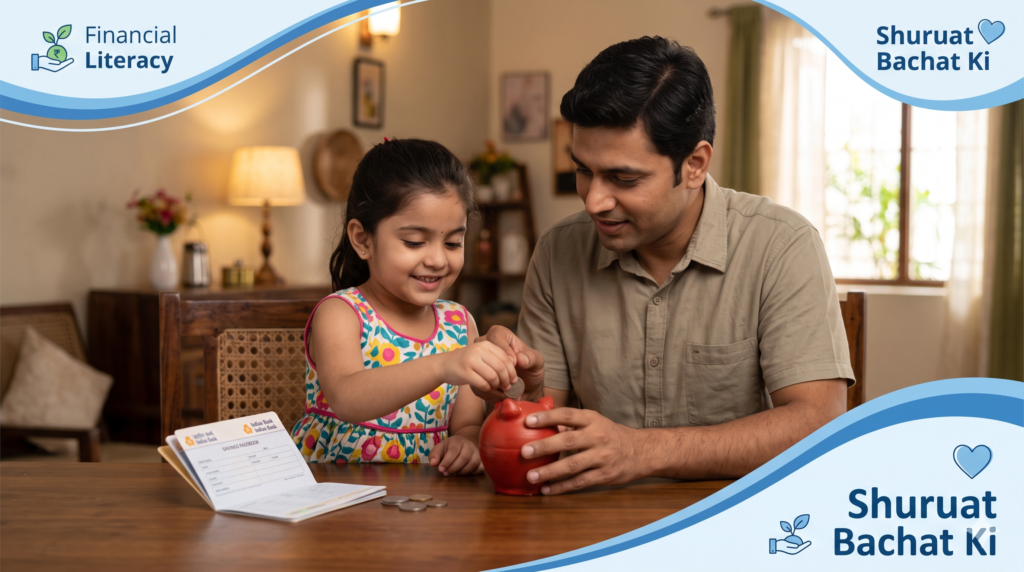
Sukanya Samriddhi Yojana: How to Open an Account for Your Daughter
Table of Contents
Introduction
Every parent wants to give their daughter a strong start in life. Education, higher studies and other important milestones can require substantial savings. Starting early can help families prepare for these future expenses without depending entirely on loans.
The Sukanya Samriddhi Yojana is a government-backed small savings scheme designed specifically for a girl child. A parent or legal guardian can open an account in an eligible girl’s name and make deposits over time. The account earns interest at a rate notified by the Government of India, subject to the scheme’s rules.
The scheme offers a structured way to save for a daughter’s long-term needs. It has defined eligibility conditions, minimum and maximum deposit limits, a 21-year maturity period and specific rules for education-related withdrawals.
In this guide, Adhikar Kendra explains how the Sukanya Samriddhi Yojana works, who can open an account, which documents are required, how to apply at a post office or authorised bank and what parents should know about deposits, interest and withdrawals.
The rules and interest rates can change, so check the latest information through India Post’s official savings scheme pagebefore opening an account.
What Is Sukanya Samriddhi Yojana?
The Sukanya Samriddhi Yojana, commonly called SSY, is a small savings scheme introduced by the Government of India under the Beti Bachao, Beti Padhao initiative.
The account is opened in the name of an eligible girl child by her parent or legal guardian. It is intended to help families build long-term savings for the girl’s future, particularly education and other eligible needs under the scheme’s rules.
The scheme is available through post offices and authorised banks. Deposits earn interest at the government-notified rate, and the account follows specific rules for contributions, withdrawals and maturity.
It is important to understand that this is a savings account, not a government grant. The money deposited belongs to the account holder under the applicable rules, and the benefits depend on the amount deposited, the interest rates notified over time and the duration of the account.
The Sukanya Samriddhi Yojana is designed for long-term financial planning rather than short-term spending. Parents should understand its lock-in period and withdrawal restrictions before choosing it for their daughter’s savings.
For official scheme rules, you can also consult the National Savings Institute’s Sukanya Samriddhi Account information.
Key Benefits of Sukanya Samriddhi Yojana
The scheme has several features that may make it useful for parents planning for a daughter’s future.
1. Government-backed savings
The scheme operates under government-notified rules. The applicable interest rate is announced by the government and can be revised periodically.
This makes it different from market-linked investments, where returns fluctuate according to investment performance. However, parents should still understand the scheme’s terms and should not assume that today’s interest rate will remain unchanged throughout the account’s life.
2. A low starting deposit
An account can be opened with a minimum initial deposit of ₹250. This allows families to start saving without needing a large amount at the beginning.
The account has an annual minimum contribution requirement as well. Parents should plan their deposits so that the account remains compliant with the scheme rules.
3. A defined long-term savings structure
The account matures 21 years after opening, subject to the applicable rules. Deposits are required during the first 15 years from the opening date, while the account continues to earn interest according to the scheme rules thereafter.
This structure can help families develop a savings habit for future expenses.
4. Interest compounded annually
Interest is calculated according to the scheme’s rules and credited annually. Over a long period, interest can contribute significantly to the account balance, although the final amount depends on deposits and the rates applicable during different years.
5. Tax benefits subject to applicable law
Eligible deposits may qualify for a tax deduction under Section 80C of the Income-tax Act, subject to the applicable tax regime and legal conditions. Interest and maturity proceeds are treated according to the tax rules in force.
Tax treatment can depend on the individual’s circumstances and the tax regime chosen. Check current Income Tax Department guidance before making a tax decision.
6. Education-related withdrawal facility
The account permits partial withdrawals for eligible higher-education expenses, subject to age, documentation and other rules.
This can help parents access part of the accumulated savings when their daughter reaches an appropriate stage of education.
The Sukanya Samriddhi Yojana is therefore best understood as a long-term savings option with defined benefits and restrictions, rather than an account that allows unrestricted withdrawals at any time.
Who Is Eligible to Open an SSY Account?
Eligibility must be checked before visiting a post office or bank.
Under the Sukanya Samriddhi Yojana, the main conditions include:
- The account must be opened in the name of a girl child who is an eligible resident Indian citizen under the scheme rules.
- The girl must be below 10 years of age on the date the account is opened.
- A parent or legal guardian can open the account on her behalf.
- Only one account can be opened in the name of each eligible girl child.
- A family can generally open accounts for up to two girl children, subject to the scheme rules.
- Special provisions may apply in cases involving twins or triplets, subject to the required documents and declarations.
Can an account be opened for a newborn girl?
Yes. An account can be opened after the girl child is born, provided the application meets the scheme’s requirements and the necessary documents are available.
Parents do not need to wait until the child starts school. Opening the account early gives them more time to make deposits and accumulate interest before maturity.
Can an account be opened for a girl who is nine years old?
Generally, yes, provided she has not attained the age of 10 on the date of opening and all other eligibility conditions are met.
Parents should not delay unnecessarily if they intend to use this scheme, because an account generally cannot be opened once the girl has reached the age of 10.
Can a family open three accounts for three daughters?
The general rule allows accounts for up to two girl children in a family. Exceptions for multiple births, such as twins or triplets, may apply under the prescribed conditions.
Families seeking to open additional accounts should provide the required birth certificates and declarations and confirm eligibility with the authorised post office or bank.
Documents Required for Sukanya Samriddhi Yojana
Before applying, keep the following documents and information ready. The authorised bank or post office may ask for additional information if required under the applicable KYC rules.
- Birth certificate of the girl child: This establishes the child’s date of birth.
- Identity proof of the parent or legal guardian: An accepted identity document, such as Aadhaar, may be used under the applicable KYC process.
- Address proof: Provide an accepted document showing the guardian’s address.
- Photograph: The parent or guardian may need to provide a recent photograph.
- Account opening form: Complete the official Sukanya Samriddhi Account application form.
- Initial deposit: Keep at least ₹250 available for the opening deposit.
- Additional documents, if applicable: Documents relating to guardianship or multiple births may be required in special circumstances.
The Sukanya Samriddhi Yojana application requires the child’s date of birth to be verified. Make sure the details in the birth certificate match the information entered on the application form.
Do not rely on an unofficial document checklist if the bank or post office gives you updated instructions. Confirm the current requirements with the institution where you intend to open the account.
How to Open a Sukanya Samriddhi Yojana Account
Parents can open the account through a post office or an authorised bank offering the scheme.
Step 1: Visit an authorised post office or bank
Choose a post office or bank branch that offers Sukanya Samriddhi accounts. You can check the official India Post savings scheme page for information about post office savings products.
Step 2: Ask for the account opening form
Request the Sukanya Samriddhi Account opening form. Read the instructions carefully before entering the information.
Step 3: Enter the girl’s details
Provide the girl’s full name, date of birth and other requested details. The information should match her birth certificate and supporting documents.
Step 4: Enter parent or guardian details
The parent or legal guardian must provide their personal information, address and identification details as requested.
If a legal guardian other than a parent is opening the account, ask the institution which additional documents are required.
Step 5: Attach the required documents
Submit the birth certificate, identity and address documents, photograph and any other documents requested by the institution.
Step 6: Deposit the opening amount
Make the initial deposit of at least ₹250. The institution will explain the accepted payment methods.
Step 7: Complete verification
The bank or post office will check the form and documents. If something is missing or incorrect, you may be asked to provide further information.
Step 8: Collect the account details
Once the account has been opened, retain the passbook or account information provided by the institution. Check the girl’s name, date of birth and other details carefully.
The Sukanya Samriddhi Yojana account should be maintained according to the prescribed deposit and withdrawal rules. Keep the passbook and payment records safe for future reference.
Can You Open an SSY Account Online?
The account-opening process may still require submission and verification of documents through an authorised bank or post office. Do not assume that a fully online opening facility is available at every institution.
Some banks and post office banking services support online deposits or account-related services for existing eligible customers. Availability depends on the institution, account access and the digital facilities enabled for the customer.
Before using an online service, check whether it is provided by your bank or India Post. Avoid entering personal or banking information on unofficial websites that claim to open an account instantly.
If you want to open an account for the first time, the safest option is to contact an authorised branch and ask whether the application can be initiated online or whether you must visit in person.
Minimum and Maximum Deposit Limits
The scheme has a defined deposit range.
| Deposit rule | Amount |
|---|---|
| Minimum initial deposit | ₹250 |
| Minimum deposit per financial year | ₹250 |
| Maximum deposit per financial year | ₹1,50,000 |
| Deposit period | First 15 years from account opening |
| Account maturity | 21 years from account opening |
The minimum annual deposit must be maintained to keep the account compliant with the scheme rules. The maximum annual deposit limit is ₹1.5 lakh.
Deposits can be made in amounts permitted under the scheme. Parents do not have to deposit the maximum amount every year. They should choose a contribution they can maintain comfortably while meeting the minimum annual requirement.
If the total deposits exceed the permitted annual limit, the excess amount does not receive interest under the scheme and is handled according to the applicable rules.
The Sukanya Samriddhi Yojana is intended for disciplined, long-term saving. Families should avoid depositing more than they can afford merely to reach the annual maximum.
What Is the Current Sukanya Samriddhi Interest Rate?
The interest rate is set by the Government of India and can be reviewed quarterly.
As of October 2026, the listed rate for the October–December 2026 quarter is 8.2% per annum, compounded annually. The rate can change in a future quarter, so it should not be treated as guaranteed for the full 21-year period.
Interest is calculated according to the scheme’s prescribed method and credited at the end of the financial year. The balance that accumulates will depend on the timing and amount of deposits and the rates notified over time.
For example, a family that makes regular deposits over many years may accumulate a larger balance than a family that deposits only the minimum. However, any future balance estimate depends on assumptions about deposits and interest rates.
The Sukanya Samriddhi Yojana should therefore be planned around affordable contributions rather than a promise of a particular maturity amount.
You can verify the current rate through the National Savings Institute’s official interest-rate information and the India Post savings schemes page.
How Long Do You Need to Make Deposits?
Deposits are required for the first 15 years from the date the account is opened. The account matures after 21 years from opening, subject to the scheme rules.
This means parents do not need to keep depositing money for all 21 years. After the deposit period ends, the balance can continue earning interest under the applicable rules until maturity.
For example, if an account is opened when the girl is two years old, the deposit period runs for 15 years from the account’s opening date. The maturity date is calculated from the opening date, not simply from the date the girl turns 18.
Keep a record of the opening date because it helps you understand when deposits are due to end and when the account is scheduled to mature.
Can You Withdraw Money Before Maturity?
The scheme does not permit unrestricted withdrawals whenever the parent wants. It provides specific withdrawal facilities for eligible purposes.
Partial withdrawal for higher education
Partial withdrawal can be permitted for the girl’s higher-education expenses, subject to the prescribed conditions.
The scheme generally allows withdrawal of up to 50% of the balance available at the end of the preceding financial year, after the account holder reaches the required age or completes the relevant educational milestone under the rules.
The withdrawal must be supported by the required documents, such as proof of admission or an appropriate fee document. The institution may ask for evidence of the education-related expense.
Premature closure for marriage
Premature closure may be permitted when the account holder reaches the eligible age and the conditions relating to her marriage are met.
The rules generally require the girl to be at least 18 years old at the time of marriage, and the account must be closed within the period allowed by the scheme rules.
Parents should not assume that they can withdraw the entire balance early for any personal expense. Confirm the applicable requirements with the institution before making a request.
What Happens When the Account Matures?
The account generally matures after 21 years from the opening date.
At maturity, the account holder can claim the accumulated balance according to the scheme rules. The balance includes the eligible deposits and interest credited over the account’s life.
If the family needs money for the girl’s education or other planned expenses, it is important to understand the maturity date and keep the required account documents available.
The Sukanya Samriddhi Yojana is not intended to provide regular monthly income. It is a long-term savings product designed to build a fund for the account holder.
Do not confuse the 15-year deposit period with the 21-year maturity period. They are separate milestones under the scheme.
Tax Benefits Under Sukanya Samriddhi Yojana
The scheme has tax-related benefits under the applicable income-tax framework.
Eligible deposits may qualify for a deduction under Section 80C, subject to the legal conditions and the tax regime applicable to the taxpayer. Interest earned and maturity proceeds are also treated according to the relevant tax rules.
Tax rules can change, and the benefits available to a taxpayer may depend on whether they use the old or new tax regime and other individual circumstances.
Before claiming a deduction, check current Income Tax Department guidance or consult a qualified tax professional.
The Sukanya Samriddhi Yojana should primarily be selected based on the daughter’s long-term savings needs, deposit requirements and withdrawal restrictions. Tax benefits can be a consideration, but they should not be the only reason for opening an account.
Common Mistakes to Avoid
Parents can make the account-opening and savings process easier by avoiding these common mistakes.
Waiting until the child is too old: The account generally must be opened before the girl reaches age 10. Check eligibility early.
Missing the minimum annual deposit: Keep track of the financial year and make sure the required minimum deposit is met.
Assuming the interest rate will never change: Rates are notified by the government and can be revised quarterly.
Confusing deposit duration with maturity: Deposits are required for 15 years, while maturity is generally after 21 years.
Entering incorrect details: Verify the child’s name and date of birth against the birth certificate.
Expecting unrestricted early withdrawal: Withdrawals are allowed only under the applicable rules.
Using unofficial websites: Use authorised banks, India Post and government information sources for account-related services.
Other Government Scheme Guides on Adhikar Kendra
Families planning for their daughter’s future may also want to understand other government benefits. These schemes have different purposes and eligibility rules.
- Read our guide to PM Awas Yojana 2026 for information about housing assistance.
- Farmers can read PM Kisan Samman Nidhi status check for help with beneficiary status.
- For eligible families seeking hospital treatment support, see Ayushman Bharat Card eligibility and benefits.
- Traditional artisans can explore PM Vishwakarma Yojana benefits and eligibility.
- For eligible women seeking a deposit-free LPG connection, read PM Ujjwala Yojana application guidance.
These links provide additional information about different government programmes. Eligibility for one scheme does not automatically make a person eligible for another.
Conclusion
The Sukanya Samriddhi Yojana provides parents and legal guardians with a structured way to save for an eligible girl’s future. It offers a government-notified interest rate, defined deposit limits and a long-term maturity period, along with specific rules for education-related withdrawals and tax treatment.
To open an account, check the girl’s age and eligibility, collect the birth certificate and required KYC documents, and visit an authorised post office or bank. Start with the required minimum deposit and keep track of annual contributions.
Remember that the interest rate can change, and the final balance depends on deposits and the rates applicable over time. Read the official rules carefully before deciding how much to save.
For the most reliable information, consult India Post and the National Savings Institute.
Frequently Asked Questions
1. Who can open a Sukanya Samriddhi Yojana account?
A parent or legal guardian can open an account in the name of an eligible girl child who is below 10 years of age, subject to the scheme rules.
2. What is the minimum amount needed to open the account?
The minimum initial deposit is ₹250. The minimum deposit requirement for each financial year is also ₹250.
3. What is the maximum annual deposit?
The maximum permitted deposit is ₹1.5 lakh per financial year.
4. What is the current interest rate?
As of October–December 2026, the notified rate is 8.2% per annum, compounded annually. The government can revise the rate in future quarters.
5. Where can I open an account?
You can open an account through a post office or an authorised bank that offers the scheme.
6. How long does the account remain open?
The account generally matures after 21 years from the date of opening. Deposits are required during the first 15 years, subject to the scheme rules.
7. Can money be withdrawn for education?
Yes. Partial withdrawals for eligible higher-education expenses are permitted subject to the applicable age, balance and documentation requirements.
8. Can I open an account for two daughters?
Generally, a family can open an account for up to two girl children. Special provisions may apply in qualifying multiple-birth cases under the scheme rules.
Related Content
- PM Awas Yojana 2026
- PM Kisan Samman Nidhi Status Check
- Ayushman Bharat Card
- PM Vishwakarma Yojana
- PM Ujjwala Yojana